


Limewash vs Whitewash: Choosing a Finish for Exterior Brick
Limewash is a mineral finish made with slaked lime, while “whitewash” can mean either a traditional lime finish or a translucent effect made with diluted paint. For an exterior brick project, comparing limewash vs whitewash starts with identifying the product and the appearance you want.
Choose a compatible limewash when you want a matte, weathered appearance with some masonry showing through. Consider a paint-based washed effect only after confirming the selected paint manufacturer allows the proposed exterior use and dilution. Neither choice repairs damaged masonry or resolves water entering the wall.
For Colorado homeowners, the decision also involves existing finishes, exposure and future upkeep. Rhino Shield of Colorado offers a different option: an installed exterior ceramic elastomeric coating system for suitable, inspected surfaces. Compare Rhino Shield’s exterior coating system when your goal is a more uniform color change.
Illustrative image, not a customer project.
Limewash and Whitewash: What Do the Names Mean?
The word “whitewash” does not identify one formula. Heritage NSW’s limewash guidance explains that unpigmented limewash may itself be called whitewash. Modern decorating advice often uses the name for diluted acrylic or latex paint instead. Ask for the product name and application specification before comparing proposals.
How Limewash Creates a Mineral Finish
Authentic limewash combines slaked lime with water and may include pigments. Limewash hardens on compatible mineral substrates through carbonation, a reaction involving carbon dioxide in the air. Absorption, coverage and application determine a flat limewash finish’s appearance.
National Park Service guidance on traditional limewash explains that overly rapid drying can interrupt carbonation and leave a weak, powdery finish. The application method must suit the substrate and selected formulation; a traditional recipe is not a substitute for a manufactured product’s instructions.
Why Whitewash Can Mean Lime or Diluted Paint
Paint-based whitewash uses a reduced-opacity paint application to let some underlying color remain visible. Traditional lime-based whitewash belongs to the same family as limewash, so the two names can describe overlapping finishes rather than competing technologies.
For this comparison, “paint-based whitewash” means the diluted-paint effect described in the Brick Industry Association’s treatment guide. A recipe from an interior fireplace makeover does not establish that a paint is suitable for an outdoor wall; confirm the selected product’s permitted exterior use and thinning before application.
Compare the Look, Coverage and Texture on Brick
The amount of masonry visible through a finish depends on the product, application and number of coats. A pale finish can still hide much of the original color; “washed” is not a reliable description of how transparent the completed wall will be.
Use this table to compare the intended effect, then approve a dried sample on your own masonry.
| Decision factor | Mineral limewash | Paint-based whitewash |
|---|---|---|
| Visual character | Matte, often varied or distressed | Translucent painted effect; appearance depends on the selected paint |
| Visible original color | Controlled through coverage and any manufacturer-approved distressing | Controlled through the approved application and opacity |
| Texture | Usually preserves the underlying masonry profile | Usually preserves the profile, with a paint film on the surface |
| Change over time | Weathering may be part of the intended appearance | Film wear and later recoating need to be considered |
| Product selection | Match the mineral finish to the substrate | Confirm exterior masonry use and permitted thinning |
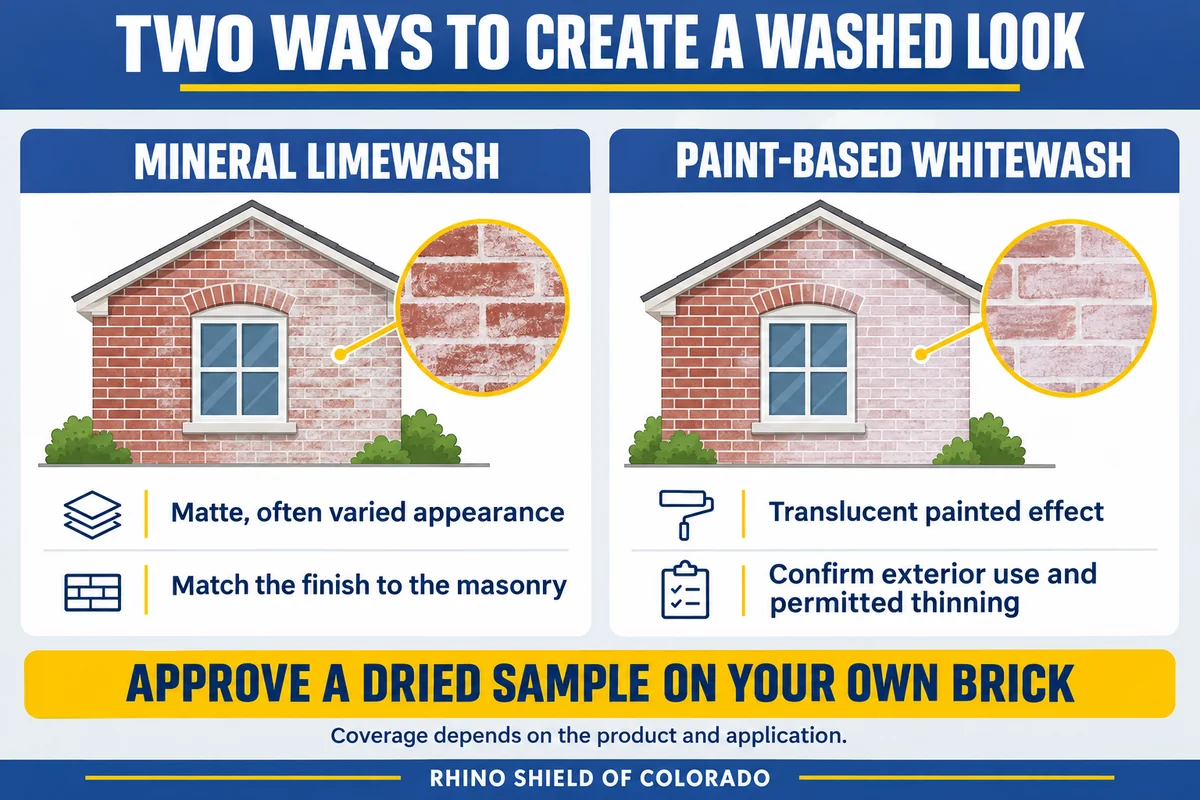
Conceptual finish illustrations; coverage varies by product and application. Open the graphic to enlarge.
Photograph the dried sample from the curb as well as close up. Include a mortar joint and more than one original brick color in the sample area. Compare the sample with the roof, windows and trim before extending a white finish across the entire exterior.
How Do These Finishes Handle Moisture and Weather?
Exterior finish performance depends on more than whether the container says limewash or whitewash. The Brick Industry Association’s March 2025 guidance distinguishes mineral limewash from diluted-paint faux finishes and says semi-opaque paint should not be expected to match limewash’s exterior durability. The BIA’s diluted-paint comparison does not rank every masonry paint or installed coating system.
Why Brick Needs a Way to Dry
Masonry can take in moisture and needs suitable drying paths. A finish that restricts drying can worsen an existing moisture problem, particularly on vulnerable older walls. The National Park Service’s brick-masonry guidance warns against concealing deteriorated historic masonry with impermeable treatments.
“Breathable” describes vapor movement; it does not mean a finish fixes leaks or makes every wall suitable for coating. Wall construction, existing treatments and moisture sources need to be considered together.
What Colorado Exposure Means for Application and Upkeep
For limewash or paint-based whitewash on Colorado brick exteriors, plan application around the selected product’s weather and early-drying requirements. Check the manufacturer’s limits for air and surface temperatures, direct sun and expected precipitation. A warm afternoon does not establish that a cold wall or the overnight forecast is acceptable.
Limewash upkeep depends partly on how much weathering you want to retain: gradual variation may suit a distressed finish but disappoint an owner expecting an unchanged white wall. A sound limewash finish can be renewed according to the selected product’s instructions; a paint-based whitewash film that is peeling needs its failure assessed and the surface prepared before recoating. Before planning touch-ups, check whether cleaning or localized renewal will change the surrounding finish’s appearance.
What Preparation Does Exterior Brick Need?
Identify the masonry, previous treatments and visible defects before selecting a cleaning method or coating. Preparation for a mineral wash can differ from preparation for conventional painting.
Ask the estimator to identify:
- Existing paint or sealer that could affect compatibility.
- Loose material, deteriorated joints or damaged masonry requiring assessment.
- Staining or deposits that could indicate moisture movement.
- The cleaning, drying and sample-approval process included in the proposal.
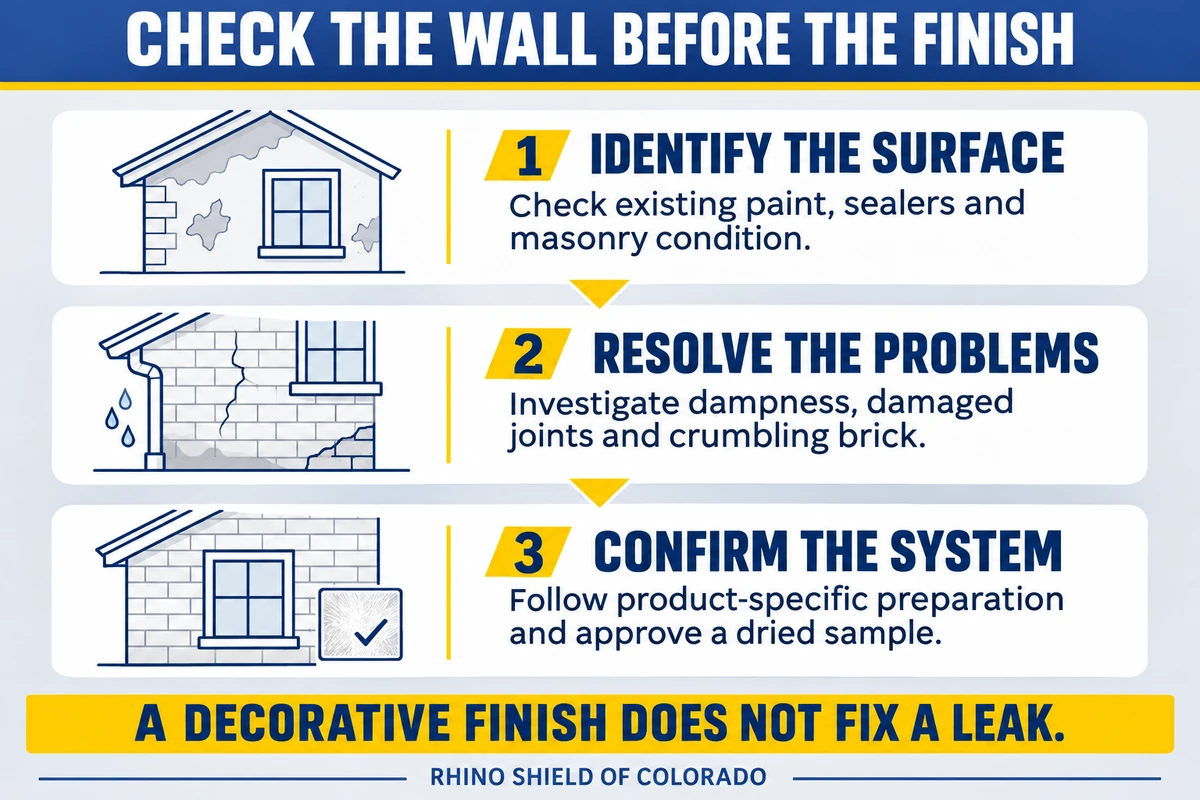
Preparation starts with the wall’s condition, previous treatments and selected system. Open the graphic to enlarge.
Unpainted, Painted and Sealed Brick Need Different Checks
Unpainted masonry is not automatically absorbent or ready for limewash. Glazed faces, sealers and contamination can change how a finish attaches. Existing paint also separates a new mineral finish from the original masonry, so product-specific preparation or a different system may be necessary.
The BIA’s surface-preparation guidance calls for evaluating prior treatments and confirming absorption where required. Where an existing coating or sealer is present, obtain current instructions for the proposed finish before deciding whether removal, preparation or another system is appropriate. If the proposed system includes a primer, include that layer in the sample you approve.
Repair Moisture Problems Before Changing the Finish
A decorative finish cannot correct a leaking gutter, failed flashing or damaged joint. Repeated staining, crumbling faces or persistent dampness should be investigated before cosmetic work begins. The repair may require a masonry or building-envelope specialist rather than a coating crew.
Rhino Shield’s application process includes evaluating the exterior and defining preparation and repair needs. Structural, drainage or major moisture work should not be assumed included in a coating estimate.
What Affects the Cost of a Brick Finish?
Compare complete project estimates rather than the price of a bucket. A small, accessible accent wall and an entire multistory exterior can require very different amounts of preparation, protection and labor.
Request written detail on:
- The measured area and surfaces included in the finish work.
- Access needs, height and protection of nearby windows or landscaping.
- Repairs, existing-finish removal and preparation allowances.
- The named product, primer if required, sample and application scope.
- Cleanup, touch-ups, care instructions and any written warranty.
For DIY work, include safe access, protective equipment and the time needed to test the finish. Material savings alone do not establish a lower total project cost. If one bid leaves preparation undefined, clarify that scope before comparing it with a more complete proposal.
How Does German Schmear Differ?
German schmear, also called mortar wash, applies mortar across parts of the masonry to create a textured, aged appearance. Limewash changes the surface finish with a mineral wash; mortar wash can obscure more of the face and alter the visible joint pattern.
Choose a mortar-wash sample if texture is central to your goal. Treat the application as a substantial aesthetic change rather than assuming it can be washed off when tastes change. The masonry condition and compatibility still matter, even when the intended result looks rustic.
When Should You Consider an Exterior Coating Instead?
An installed exterior coating is worth comparing when you want a consistent color across the wall and are evaluating preparation, maintenance and the complete installation scope. A uniform coated appearance serves a different design goal from leaving patches of original masonry visible.
Rhino Shield of Colorado’s brick coating service is part of its ceramic elastomeric exterior system. Rhino Shield coating selection starts with an inspection of the existing surface to determine whether coating is appropriate. Rhino Shield of Colorado’s 25-year transferable limited warranty is subject to written project terms; the term is not a promise that every exterior issue is covered.
Which Finish Fits Your Home and Priorities?
Choose a brick finish by matching the desired appearance with the wall’s condition and a realistic care plan. Use these priorities to narrow the conversation:
- A varied, matte appearance: ask about a compatible mineral limewash and approve its dried sample.
- A translucent painted effect: confirm that the proposed exterior product and application are manufacturer-supported.
- A more uniform color change: compare a specified masonry paint or installed coating system.
- Keeping the original material: consider leaving sound masonry exposed and addressing maintenance needs directly.
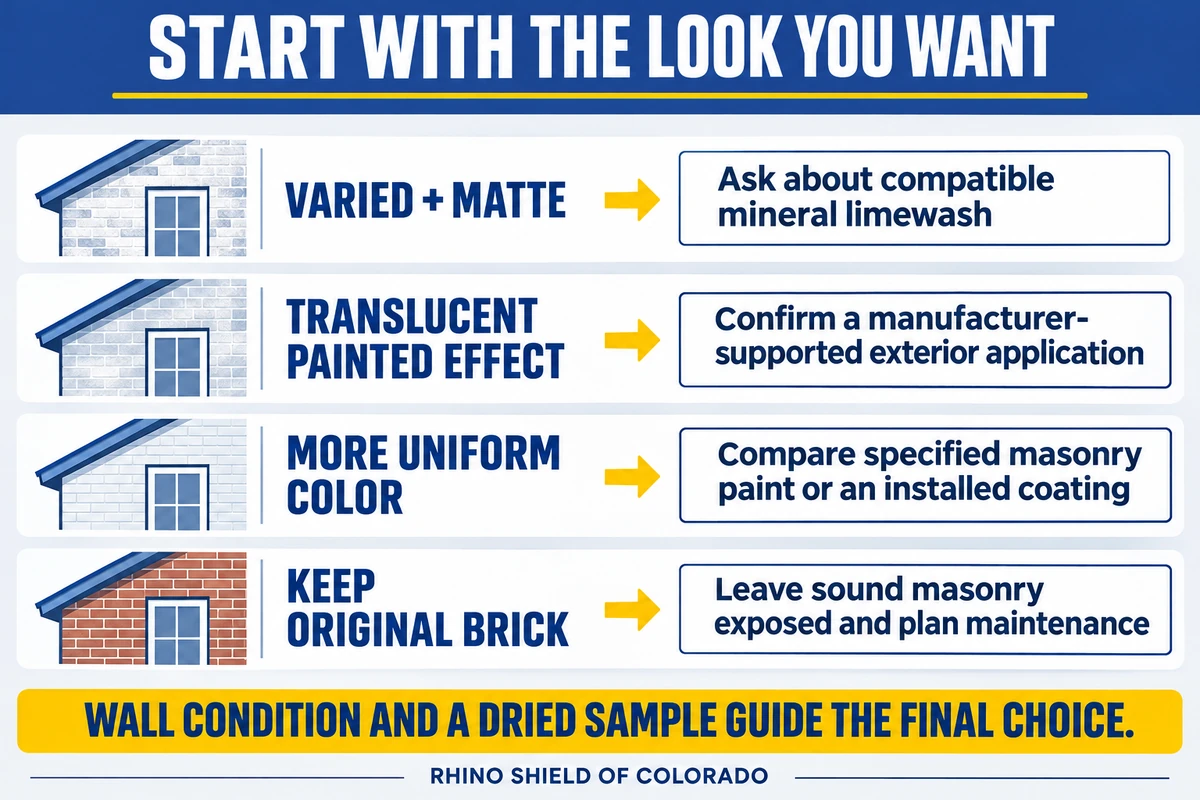
Match the desired appearance to a suitable system and realistic maintenance plan. Open the graphic to enlarge.
Bring your preferred sample or reference photo to the estimate. Ask the contractor to explain which aspects can be reproduced on your wall and which depend on the original color, texture or previous treatments.
Common Questions About Brick Finishes
Before accepting a proposal for limewash or paint-based whitewash, identify what will go on the wall, whether a topcoat is included and how future repairs will be handled.
Can You Apply These Finishes Over Painted Brick?
Limewash or paint-based whitewash should be applied over an existing painted wall only when the selected system’s manufacturer approves that substrate and specifies the required preparation. Identify the old coating’s condition and obtain guidance for the selected new product. Do not assume a fresh mineral wash will bond through loose or incompatible paint.
Can You Restore the Original Brick Later?
Removing a finish may leave residue or damage the original masonry face. A manufacturer’s opportunity to distress freshly applied limewash is different from a promise of complete removal after curing or years of exposure. Avoid treating pressure washing or abrasive stripping as a guaranteed way to reverse a whole-house color change.
Does a Translucent Finish Need a Sealer?
A translucent limewash or paint-based whitewash finish does not automatically require a sealer; the selected system and wall conditions determine whether a topcoat is appropriate. Use only a protective treatment approved for the selected finish and wall conditions. Ask whether the topcoat changes the look, drying characteristics or maintenance process; a generic “waterproof” layer is not an automatic improvement.
Can Rhino Shield Create a Whitewashed Look?
A white Rhino Shield exterior and a translucent washed finish should not be assumed to look alike. Rhino Shield’s documented offer is an installed exterior coating system; a particular distressed or see-through effect needs specific confirmation. Bring a sample to the consultation so the appearance and suitable options can be discussed before choosing the system.
If you are considering a more uniform exterior coating for your Colorado home, request a Rhino Shield estimate to review your masonry, preparation needs and finish goals.

Related Posts


